Thursday, 30 October 2025

Beluga Whale: The White Whale of the Arctic Introduction The Beluga whale (Delphinapterus leucas), often called the “white whale”, is one of the most distinctive and fascinating marine mammals found in the Arctic and sub-Arctic waters. Known for its brilliant white color, melodious vocalizations, and friendly nature, the Beluga is a symbol of the icy northern seas. Its name “Beluga” is derived from the Russian word belyi, meaning “white.”


Here’s a detailed, blog-ready article on the Beluga Whale (Delphinapterus leucas) — ideal for educational or wildlife content.

Scientific Classification

Category Details
Kingdom: Animalia
Phylum: Chordata
Class: Mammalia
Order: Cetacea
Family: Monodontidae
Genus: Delphinapterus
Species: Delphinapterus leucas

The Beluga whale is closely related to the Narwhal, another Arctic whale species known for its long spiral tusk. Together, they form the Monodontidae family.


Physical Characteristics

  • Color: Adult Belugas are pure white, which helps them blend with the Arctic ice. Calves are born gray or brown and gradually turn white as they mature (usually by age 5–8).

  • Size: Adults measure about 3–5.5 meters (10–18 feet) in length.

  • Weight: Between 1,100–1,600 kilograms (2,400–3,500 pounds).

  • Body Shape: Streamlined and rounded with a thick layer of blubber (up to 15 cm thick) for insulation.

  • Distinct Features:

    • A bulbous forehead called a melon, which helps in sound production and echolocation.

    • No dorsal fin — instead, a dorsal ridge, allowing easy movement under sea ice.

    • Flexible neck vertebrae, enabling the Beluga to turn its head side to side, unlike most whales.


Habitat and Distribution

Belugas inhabit Arctic and sub-Arctic waters, including the coastal regions of Canada, Russia, Alaska, and Greenland. During summer, they migrate to estuaries, river mouths, and shallow coastal waters, often forming large social groups. In winter, they move to areas with looser sea ice where breathing holes remain open.


Behavior and Social Structure

Beluga whales are highly social and often found in pods of 10–20 individuals, although hundreds can gather during migrations or feeding events.

  • Communication: Known as the “canaries of the sea”, Belugas produce a wide range of clicks, whistles, chirps, and squeaks for communication and echolocation.

  • Echolocation: They use sound waves to navigate, hunt, and avoid obstacles under the ice.

  • Playfulness: Belugas are curious and playful, often seen interacting with boats, humans, or floating objects.


Diet and Feeding Habits

Belugas are opportunistic feeders with a varied diet, depending on location and season.

Common foods include:

  • Fish (salmon, capelin, Arctic cod, herring)

  • Crustaceans (shrimp, crabs)

  • Squid and octopus

  • Worms and mollusks from the seabed

They use echolocation to locate prey in dark, murky waters and may blow jets of water into the seabed to expose hidden prey.


Reproduction and Lifespan

  • Mating Season: Generally between April and May.

  • Gestation Period: Around 14–15 months.

  • Calves: Usually one calf per birth, measuring about 1.5 meters (5 feet) long and weighing 80–100 kg (175–220 lbs).

  • Nursing: Calves nurse for about 18–24 months.

  • Lifespan: Typically 35–50 years, though some individuals can live up to 60 years in the wild.


Adaptations to Arctic Life

Beluga whales are perfectly adapted to their icy environment:

  • Blubber layer provides insulation and energy storage.

  • Melon organ aids in communication and navigation under ice.

  • Absence of a dorsal fin prevents heat loss and helps them swim beneath thick ice sheets.

  • Flexible neck allows them to look around and navigate ice openings.


Predators and Threats

Natural Predators:

  • Killer whales (orcas) and polar bears occasionally prey on Belugas, particularly young or trapped individuals.

Human-Related Threats:

  • Climate change reducing sea ice habitats.

  • Pollution (especially heavy metals and PCBs accumulating in the food chain).

  • Oil and gas exploration leading to habitat disturbance and noise pollution.

  • Ship traffic increasing risk of collisions and interference with communication.

  • Subsistence hunting by indigenous Arctic communities (though often regulated).


Conservation Status

  • IUCN Status: Near Threatened (globally)

  • Certain populations, such as those in Cook Inlet (Alaska), are listed as Critically Endangered.

Conservation efforts include:

  • Protection under the Marine Mammal Protection Act (MMPA) and Endangered Species Act (ESA).

  • Establishing marine protected areas (MPAs).

  • Monitoring and limiting industrial activities in Beluga habitats.

  • Supporting community-led Arctic conservation programs.


Interesting Facts

  • Belugas can swim backward, a rare ability among whales.

  • They can change facial expressions due to their flexible lips and necks.

  • Belugas are one of the few whale species kept in aquariums, though captivity is controversial.

  • Their melodic sounds can be heard above water and are often described as “singing.”


Conclusion

The Beluga whale is a remarkable and intelligent Arctic mammal — graceful, social, and essential to the marine ecosystem. However, its future is increasingly threatened by climate change, pollution, and human activities. Preserving Belugas means protecting the fragile Arctic environment they call home. With continued global conservation efforts, the haunting songs of the Beluga may continue to echo through the icy northern seas for generations to come.


Would you like me to include a “Beluga Whale Facts at a Glance” infographic section (for quick reference), or a comparison table between Beluga and Narwhal for your blog readers?


"This Content Sponsored by SBO Digital Marketing.

Mobile-Based Part-Time Job Opportunity by SBO!

Earn money online by doing simple content publishing and sharing tasks. Here's how:

  • Job Type: Mobile-based part-time work
  • Work Involves:
    • Content publishing
    • Content sharing on social media
  • Time Required: As little as 1 hour a day
  • Earnings: ₹300 or more daily
  • Requirements:
    • Active Facebook and Instagram account
    • Basic knowledge of using mobile and social media

For more details:

WhatsApp your Name and Qualification to 9943990669

a.Online Part Time Jobs from Home

b.Work from Home Jobs Without Investment

c.Freelance Jobs Online for Students

d.Mobile Based Online Jobs

e.Daily Payment Online Jobs

Keyword & Tag: #OnlinePartTimeJob #WorkFromHome #EarnMoneyOnline #PartTimeJob #jobs #jobalerts #withoutinvestmentjob"

Wednesday, 29 October 2025

Introduction The Beluga Sturgeon (scientific name Huso huso) is a truly remarkable fish species — both for its size and for its significance to humans. It belongs to the sturgeon family (Acipenseridae) and is found historically in the Caspian Sea, Black Sea, Sea of Azov and their tributaries. (Wikipedia)


Beluga Sturgeon

Image

Image

Image


Key Facts & Features

  • Size: Beluga sturgeons are among the largest bony (osteichthyan) fishes alive today. The largest accepted record was around 7.2 m in length and 1,571 kg in weight. (danube-sturgeons.org)

  • Habitat & migration: They are anadromous (move between sea and rivers) or at least euryhaline (able to handle varying salinity) — entering rivers to spawn. (Animal Diversity Web)

  • Appearance: They have elongated bodies, five longitudinal rows of bony scutes (as typical for sturgeons), a large protractile underside mouth and barbels (sensory “whisker‐like” organs) near the snout. (L'AquΓ rium)

  • Lifespan & maturity: They mature quite late (females often 16–22 years before first spawn) and are long-lived. (Wikipedia)

Ecology & Behavior

  • Diet: Juveniles feed mostly on invertebrates; as they grow they shift to large fish. Adults are serious predators. (Oceana)

  • Spawning: They migrate into rivers (or upriver sections) to spawn on clean gravel/rock substrate. Dams and other obstructions have severely impacted their spawning routes. (CITES)

  • Range decline: Due to human impacts their historical range (which included many rivers and seas) has significantly contracted. (Wikipedia)

Importance & Human Use

  • Caviar: The roe (eggs) of the Beluga sturgeon are highly prized as “beluga caviar.” This has made adult females especially targeted. (Oceana)

  • Commercial value: Because of the high market value of the eggs and the large size of the fish, they have been over-exploited. (Wikipedia)

Conservation Status & Threats

  • Status: The IUCN lists the Beluga sturgeon as Critically Endangered. (Wikipedia)

  • Major threats:

    • Overfishing / illegal poaching (especially mature females for roe)

    • Habitat loss: Dams blocking upriver migration and spawning grounds. (CITES)

    • Pollution: Affects water quality and spawning success. (Wikipedia)

  • Trade restrictions: The species is subject to international trade controls (e.g., under CITES) to curb exploitation. (CITES)

Interesting Highlights

  • Among the largest freshwater fish: While they often spend time in brackish or sea waters, their size makes them contenders for “largest freshwater fish” in terms of mass. (Wikipedia)

  • Slow life-history makes them vulnerable: Because they take so long to reach maturity and spawn infrequently, population recovery is slow if adults are removed.

  • Because of their large size, long lifespan, and value, they serve as a kind of “flagship” species for conservation of large riverine and estuarine fish fauna.

Relevance for Your Blog

If you’re writing about the Beluga sturgeon, you might consider the following angles:

  • A “giant of the river/sea”: Highlight how enormous they become, their fascinating biology and migration.

  • The human-dimension: How value of caviar drove over-exploitation, and the conflict between luxury use and species survival.

  • Conservation efforts: What is being done (breeding programmes, river-restoration, fishing bans) and what remains challenging.

  • Why it matters: Beyond the species itself, it is an indicator of healthy (or degraded) river + estuary ecosystems.

  • A “time-bomb” story: Because species with such slow reproductive cycles are especially vulnerable to extinction, there's urgency embedded in the story.

Conclusion

The Beluga sturgeon is a spectacular fish — one of the largest, most ancient in terms of evolutionary lineage (sturgeons are “living fossils” of sorts), and deeply entwined with human culture through the luxury trade of caviar. Yet precisely because of its value and its biological vulnerabilities it faces a precarious future. Its plight illustrates how human desires and ecosystem health can collide — and how once-abundant giants of rivers and seas can vanish unless deliberate conservation action is taken. For your blog, the Beluga sturgeon offers a powerful narrative of grandeur, vulnerability, and the interconnectedness of human use and nature’s limits.

If you like, I can pull together a full blog-ready draft on the Beluga sturgeon, complete with headings, suggested image captions, and sources you can embed. Would you like me to do that?


"This Content Sponsored by SBO Digital Marketing.

Mobile-Based Part-Time Job Opportunity by SBO!

Earn money online by doing simple content publishing and sharing tasks. Here's how:

  • Job Type: Mobile-based part-time work
  • Work Involves:
    • Content publishing
    • Content sharing on social media
  • Time Required: As little as 1 hour a day
  • Earnings: ₹300 or more daily
  • Requirements:
    • Active Facebook and Instagram account
    • Basic knowledge of using mobile and social media

For more details:

WhatsApp your Name and Qualification to 9943990669

a.Online Part Time Jobs from Home

b.Work from Home Jobs Without Investment

c.Freelance Jobs Online for Students

d.Mobile Based Online Jobs

e.Daily Payment Online Jobs

Keyword & Tag: #OnlinePartTimeJob #WorkFromHome #EarnMoneyOnline #PartTimeJob #jobs #jobalerts #withoutinvestmentjob"

Tuesday, 28 October 2025

🐟 Batfishes (Family Ogcocephalidae) Batfishes are a distinctive group of bottom-dwelling anglerfishes known for their strange, flattened bodies and unusual method of “walking” on the seafloor. They belong to the order Lophiiformes, the same group as deep-sea anglerfish.


πŸ”Ή Key Characteristics

  • Body Shape: dorsoventrally flattened; triangular, disc-like form

  • Locomotion: walk on modified pectoral and pelvic fins like limbs, rather than swimming

  • Mouth: small, often slightly turned downward

  • Skin: rough, often covered with mucus-secreting tubercles

  • Illicium (fishing lure): a small lure in front of head, sometimes retractable and reduced

πŸ”Ή Size

  • Typically 10–40 cm in length (a few species larger)

πŸ”Ή Habitat

  • Tropical and subtropical oceans worldwide

  • Found on continental shelves and slopes, coral reefs, sandy and muddy bottoms

  • Depth range: shallow coastal waters to >1000 m deep (many species deep-sea)

πŸ”Ή Behavior & Diet

  • Poor swimmers — rely on camouflage and walking

  • Ambush predators

  • Feed on small fish, worms, crustaceans using the illicium to attract prey


🧬 Classification

Rank Taxon
Kingdom Animalia
Phylum Chordata
Class Actinopterygii
Order Lophiiformes
Family Ogcocephalidae (Batfishes)

🐠 Notable Genera & Species

  • Ogcocephalus — e.g., Shortnose Batfish

  • Halieutaea — e.g., Eastern Indian Batfish

  • Halicmetus

  • Malthopsis

  • Coelophrys

Total: ~75–80 species described in this family.


🌊 Special Adaptations

Adaptation Purpose
Modified fins like legs Walking on seabed
Cryptic coloration Camouflage on sand/mud
Reduced illicium Still acts as lure but less prominent than other anglerfish
Flattened body Bottom-hugging lifestyle

Some species also have structures that help detect chemicals on the seafloor — useful for hunting in murky depths.


πŸ“Œ Interesting Facts

  • Their faces and body shapes often appear bizarre — sometimes compared to frogs, rays, or even UFOs!

  • Some species can inflate themselves slightly when disturbed.

  • Their mucus-coated skin may help prevent infections.


If you want, I can also provide:

✅ High-resolution images
✅ A printable reference sheet
✅ A section formatted for biology reports or blogs
✅ Comparison with other anglerfish families

Would you like more details about a specific genus or species of batfish?


"This Content Sponsored by SBO Digital Marketing.

Mobile-Based Part-Time Job Opportunity by SBO!

Earn money online by doing simple content publishing and sharing tasks. Here's how:

  • Job Type: Mobile-based part-time work
  • Work Involves:
    • Content publishing
    • Content sharing on social media
  • Time Required: As little as 1 hour a day
  • Earnings: ₹300 or more daily
  • Requirements:
    • Active Facebook and Instagram account
    • Basic knowledge of using mobile and social media

For more details:

WhatsApp your Name and Qualification to 9943990669

a.Online Part Time Jobs from Home

b.Work from Home Jobs Without Investment

c.Freelance Jobs Online for Students

d.Mobile Based Online Jobs

e.Daily Payment Online Jobs

Keyword & Tag: #OnlinePartTimeJob #WorkFromHome #EarnMoneyOnline #PartTimeJob #jobs #jobalerts #withoutinvestmentjob"

Sunday, 26 October 2025

The basking shark is the second-largest living shark and fish, after the whale shark. It is one of three plankton-eating shark species, along with the whale shark and megamouth shark. Typically, basking sharks reach 7.9 m in length, but large individuals have been known to grow more than 10 m long.


Here’s a clean, informative overview of the Basking Shark (Cetorhinus maximus) — useful for study or blogging:


🦈 Basking Shark (Cetorhinus maximus)

The Basking Shark is the second-largest fish in the world after the whale shark. Despite its massive size, it is a gentle filter feeder, swimming slowly near the surface with its enormous mouth open to consume microscopic plankton.

πŸ”Ή Key Facts

Feature Details
Scientific Name Cetorhinus maximus
Length Up to 15 meters (49 ft)
Weight Up to 6–8 tons
Lifespan Likely 50+ years
Diet Plankton (filter feeder)
Habitat Temperate oceans worldwide
Swimming Style Slow-moving, near-surface (“basking”)
Reproduction Ovoviviparous (pups develop inside mother, born alive)

🌊 Behaviour & Adaptations

  • Large gill rakers filter plankton from seawater

  • Often seen basking at the surface, especially in summer

  • Migratory, traveling long distances for feeding

  • Solitary or found in small groups


🧬 Anatomy Highlights

  • Huge mouth up to 1 meter wide

  • Three prominent dorsal ridges on the back

  • Greyish-brown body with rough skin (dermal denticles)

  • Gigantic gills that nearly encircle the head


❗Conservation Status

  • Endangered (IUCN Red List)

  • Major threats:

    • Overfishing (historically for liver oil and fins)

    • Accidental capture in fishing nets

    • Boat strikes

    • Slow reproduction rates

Protection measures include fishing bans and international conservation agreements.


🧩 Fun Facts

  • Despite their size and teeth-like denticles, they are harmless to humans.

  • Their name comes from their habit of “basking” at the ocean surface.

  • Can filter over 1,500 liters of water per hour!


If you'd like, I can also help you convert this into a blog post format, infographic style, or provide SEO keywords for your site.


"This Content Sponsored by SBO Digital Marketing.

Mobile-Based Part-Time Job Opportunity by SBO!

Earn money online by doing simple content publishing and sharing tasks. Here's how:

  • Job Type: Mobile-based part-time work
  • Work Involves:
    • Content publishing
    • Content sharing on social media
  • Time Required: As little as 1 hour a day
  • Earnings: ₹300 or more daily
  • Requirements:
    • Active Facebook and Instagram account
    • Basic knowledge of using mobile and social media

For more details:

WhatsApp your Name and Qualification to 9943990669

a.Online Part Time Jobs from Home

b.Work from Home Jobs Without Investment

c.Freelance Jobs Online for Students

d.Mobile Based Online Jobs

e.Daily Payment Online Jobs

Keyword & Tag: #OnlinePartTimeJob #WorkFromHome #EarnMoneyOnline #PartTimeJob #jobs #jobalerts #withoutinvestmentjob"

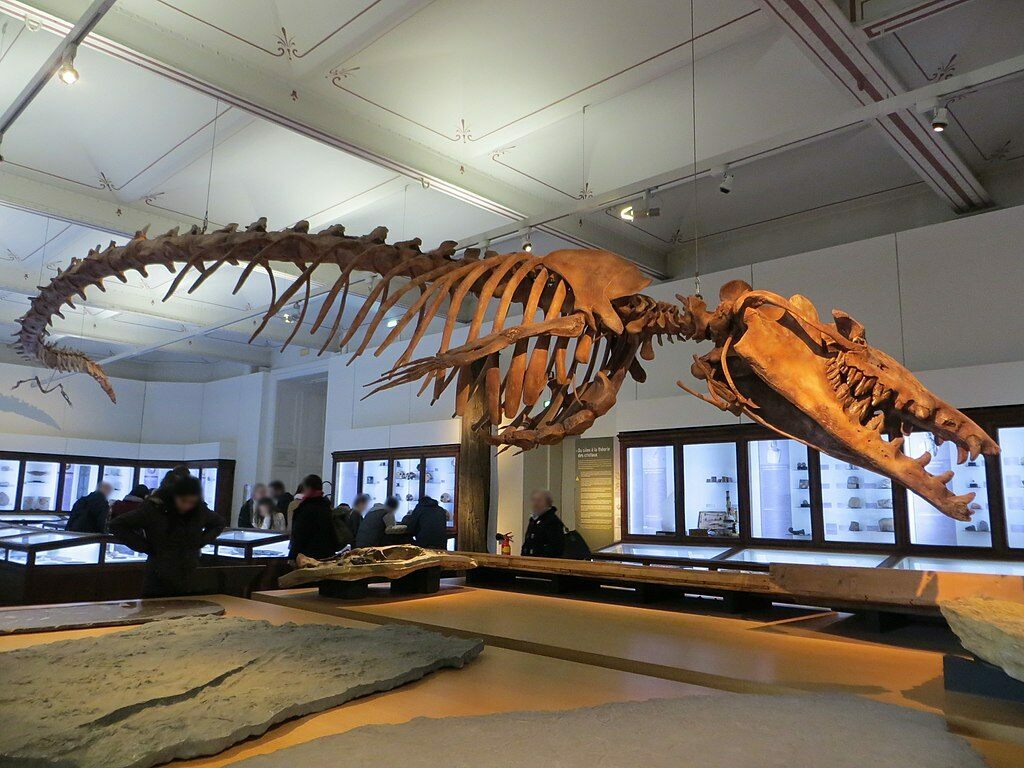
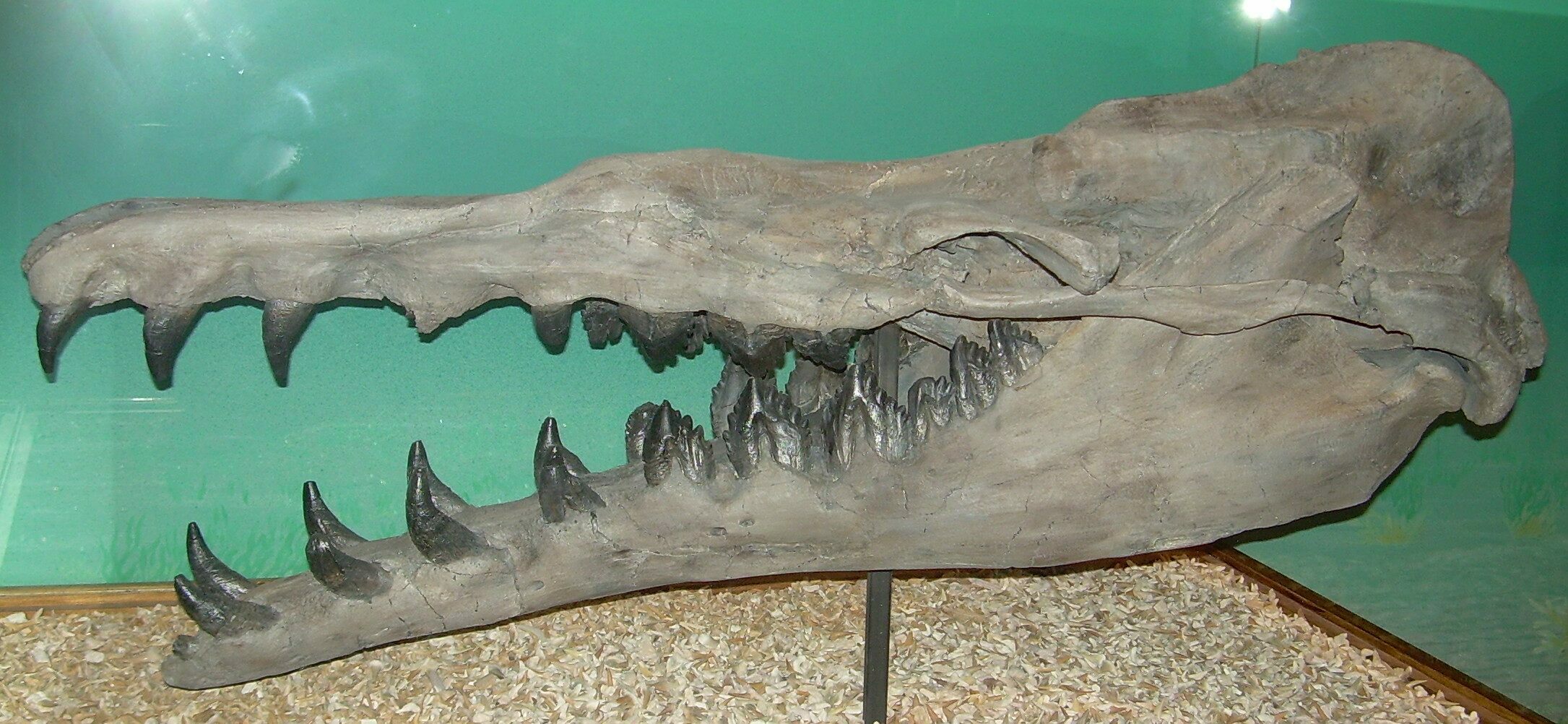
What is Basilosaurus? Basilosaurus is an extinct genus of early whales (archaeocete cetaceans) that lived during the Late Eocene (~41.3 to 33.9 million years ago).


Basilosaurus

Image

Image

Image

Here’s a detailed overview of Basilosaurus — an extraordinary ancient whale-like creature.
(As always: for general knowledge only, not anything medical or practical.)

  • Despite the name meaning “king lizard” (from Greek basileus = king + sauros = lizard), it was not a reptile but a fully aquatic mammal. The mis-naming happened because early fossil discoverers initially thought it was a marine reptile. (Wikipedia)

  • It belonged to the family Basilosauridae, which are a group of stem whales (pre-modern whales) and among the first fully aquatic cetaceans. (Wikipedia)


Physical characteristics & size

  • Some species reached very large sizes: for example, Basilosaurus cetoides (one of the best known) measured around 17-20 m (55-65 ft) in length and possibly weighed up to ~15 metric tons in one estimate. (Wikipedia)

  • Its body was unusually elongated (serpentine) compared to modern whales: the vertebrae, especially in the posterior thoracic / lumbar / anterior caudal region, were greatly stretched. (Wikipedia)

  • Unlike modern whales, it had heterodont dentition — different types of teeth (canines, molars) used for grabbing and chewing prey, rather than just swallowing whole. (New York Tech)

  • It still retained small hind-limbs (vestigial) — evidence of its land-mammal ancestry — though these limbs were not useful for walking. (Wikipedia)


Ecology & locomotion

  • Habitat: It inhabited warm shallow seas and inland seas during the Eocene. Fossils have been found in locations such as the southeastern United States (Alabama, Louisiana) and North Africa/Egypt (Wadi al-Hitan) indicating wide distribution. (encyclopediaofalabama.org)

  • Feeding: Basilosaurus was likely a top predator of its time, feeding on large fish, sharks, and smaller marine mammals. For instance, stomach contents of B. cetoides show fish bones. (New York Tech)

  • Swimming style: Because of its long, snake-like body and vertebral structure, it may have swum with an undulating motion (anguilliform) near the surface, rather than the strong tail-fluke driven swimming of modern whales. (Wikipedia)


Evolutionary significance

  • As an archaeocete, Basilosaurus represents an important stage in whale evolution: one of the early fully aquatic mammals bridging more terrestrial ancestors and modern whales. (FossilEra)

  • The mix of features (vestigial limbs, elongated body, heterodont teeth) shows how whales transitioned from land to sea and how many unusual anatomical features existed in that journey.

  • Its existence shows that by the Late Eocene, large aquatic mammals had already evolved to fill oceanic predator niches.


Fossil & historical notes

  • The type species B. cetoides was first described in 1834/1839 from fossils in the United States. (Wikipedia)

  • The fossils were once so common in parts of Alabama that vertebrae were used as furniture! (Interesting historical side-note.) (encyclopediaofalabama.org)

  • Because of the initial misidentification as a reptile, the name “–saurus” remained even though it’s clearly a mammal. Zoological naming rules locked in the original name. (Wikipedia)


Why Basilosaurus matters

  • It gives us direct insight into the marine ecosystems of the Eocene, especially predator-prey relationships in ancient seas.

  • It helps us understand the anatomical transformations from land-living mammals to the streamlined modern whales (e.g., limb loss, body elongation, tooth changes).

  • Its fossils are often spectacular (large skeletons, good preservation), making it a “showcase” fossil for evolutionary studies and public interest.


If you like, I can pull up detailed species comparisons (e.g., B. cetoides vs B. isis), or a deep dive on the fossil sites (e.g., Wadi al-Hitan in Egypt) for Basilosaurus. Would you prefer that?


"This Content Sponsored by SBO Digital Marketing.

Mobile-Based Part-Time Job Opportunity by SBO!

Earn money online by doing simple content publishing and sharing tasks. Here's how:

  • Job Type: Mobile-based part-time work
  • Work Involves:
    • Content publishing
    • Content sharing on social media
  • Time Required: As little as 1 hour a day
  • Earnings: ₹300 or more daily
  • Requirements:
    • Active Facebook and Instagram account
    • Basic knowledge of using mobile and social media

For more details:

WhatsApp your Name and Qualification to 9943990669

a.Online Part Time Jobs from Home

b.Work from Home Jobs Without Investment

c.Freelance Jobs Online for Students

d.Mobile Based Online Jobs

e.Daily Payment Online Jobs

Keyword & Tag: #OnlinePartTimeJob #WorkFromHome #EarnMoneyOnline #PartTimeJob #jobs #jobalerts #withoutinvestmentjob"

Saturday, 25 October 2025

Barreleye fish Scientific name: Macropinna microstoma Family: Opisthoproctidae Order: Argentiniformes Habitat: Deep-sea (typically 400–2,500 meters below the surface) Distribution: Pacific Ocean, particularly off the coasts of California and Japan


Absolutely — here’s a detailed, complete overview of the Barreleye Fish, one of the most fascinating and alien-looking deep-sea creatures known to science. 🌊🐟


🧬 Taxonomy & Classification

Level Name
Kingdom Animalia
Phylum Chordata
Class Actinopterygii (ray-finned fishes)
Order Argentiniformes
Family Opisthoproctidae (Barreleyes or Spookfishes)
Genus Macropinna
Species Macropinna microstoma

There are several related genera within the Opisthoproctidae family, but Macropinna microstoma is the best-known due to its transparent head.


πŸ” Distinctive Features

🧠 1. Transparent, Dome-Shaped Head

  • The most iconic feature — a fluid-filled, transparent dome that covers the top of its head.

  • This dome protects the tubular eyes and allows the fish to collect light from the dark deep sea without distortion.

  • The eyes are green, barrel-shaped, and can rotate both upward and forward within the head.

  • This adaptation helps it:

    • Look upwards to spot prey silhouetted against faint light from above.

    • Look forward when feeding.

πŸ‘️ 2. Tubular Eyes

  • The eyes are highly sensitive to light and optimized for detecting bioluminescence.

  • The green pigment in its eyes filters sunlight, helping it focus on bioluminescent prey instead of surface glare.

πŸͺΈ 3. Small Mouth

  • Microstoma literally means “small mouth.”

  • It feeds delicately, likely on small drifting jellyfish, zooplankton, or larval crustaceans.

🫧 4. Fins

  • Large, broad pectoral fins help it hover motionlessly in the water column — a key adaptation for conserving energy in the deep sea.

  • The dorsal and anal fins are small and positioned far back.

πŸ“ 5. Size

  • Usually around 15 cm (6 inches) in length.


🌊 Habitat & Distribution

  • Depth: 400–2,500 meters (1,300–8,200 ft) — the mesopelagic (“twilight”) zone.

  • Temperature: Cold waters (around 4–8 °C).

  • Regions:

    • North Pacific Ocean (especially Monterey Bay, California)

    • Western Pacific (Japan)

    • Reported sporadically in other temperate Pacific areas


🍽️ Feeding Behavior

  • Feeds mainly on small drifting animals such as zooplankton, jellyfish, and possibly siphonophores.

  • Often hovers motionless beneath prey, using its upward-pointing tubular eyes to detect silhouettes.

  • When it finds food, it rotates its eyes forward and moves upward to capture it with its small mouth.


πŸ”¬ Adaptations to Deep-Sea Life

Adaptation Function
Transparent dome Protects sensitive eyes, allows full range of vision
Tubular, green-pigmented eyes Maximize light collection and contrast detection
Stationary hovering ability Energy conservation in low-food environments
Gel-filled head cavity Equalizes pressure and refracts light efficiently
Bioluminescent prey detection Vision tuned to spot faint light from prey organisms

πŸ“Έ Discovery & Observation

  • Macropinna microstoma was first described in 1939 from trawl-caught specimens — but the transparent dome was usually destroyed in nets.

  • In 2009, researchers at the Monterey Bay Aquarium Research Institute (MBARI) captured live video footage for the first time, confirming:

    • The head is indeed transparent in life.

    • The eyes can rotate inside the dome.

    • The fish maintains a stable hovering position while scanning upward for prey.


⚗️ Scientific Importance

  • Demonstrates extreme adaptations to deep-sea light conditions.

  • Challenges assumptions about vertebrate eye design and visual systems.

  • Inspires biomimetic optical research (transparent domes, low-light imaging).


⚠️ Conservation Status

  • IUCN Red List: Not Evaluated

  • Threats: Minimal direct human threat (too deep for fishing nets), but potentially affected by:

    • Deep-sea trawling

    • Ocean acidification and climate change (altering deep-sea food webs)


πŸ“š Key Facts Summary

Feature Detail
Scientific name Macropinna microstoma
Common name Barreleye fish
Habitat Deep-sea (400–2,500 m)
Size ~15 cm
Distinctive trait Transparent, fluid-filled head
Eye type Tubular, rotatable, green-pigmented
Feeding Jellyfish, plankton, small crustaceans
Behavior Hovering ambush predator
Discovery Described 1939; filmed alive 2009 (MBARI)

πŸ“– References

  • Robison, B.H. & Reisenbichler, K.R. (2009). Macropinna microstoma and the Paradox of its Transparent Head. MBARI Research Report.

  • Monterey Bay Aquarium Research Institute (MBARI) Video, 2009.

  • Haddock, S.H.D., et al. (2017). Bioluminescence and Vision in the Deep Sea. Annual Review of Marine Science, 9: 417–442.

  • FishBase: Macropinna microstoma summary (updated 2024).


Would you like me to show you a labeled illustration of the barreleye fish — showing its transparent dome, tubular eyes, and head anatomy?


"This Content Sponsored by SBO Digital Marketing.

Mobile-Based Part-Time Job Opportunity by SBO!

Earn money online by doing simple content publishing and sharing tasks. Here's how:

·         Job Type: Mobile-based part-time work

·         Work Involves:

·          

o    Content publishing

o    Content sharing on social media

·         Time Required: As little as 1 hour a day

·         Earnings: ₹300 or more daily

·         Requirements:

·          

o    Active Facebook and Instagram account

o    Basic knowledge of using mobile and social media

For more details:

WhatsApp your Name and Qualification to 9943990669

a.Online Part Time Jobs from Home

b.Work from Home Jobs Without Investment

c.Freelance Jobs Online for Students

d.Mobile Based Online Jobs

e.Daily Payment Online Jobs

Keyword & Tag: #OnlinePartTimeJob #WorkFromHome #EarnMoneyOnline #PartTimeJob #jobs #jobalerts #withoutinvestmentjob"

Friday, 24 October 2025

Barracuda: The Sleek Predator of the Tropics If you’ve ever snorkeled in tropical waters and caught sight of a long, silver flash darting through the blue, chances are you’ve met one of the ocean’s most misunderstood predators — the barracuda.


⚡ Fast, Fierce, and Fearsome

The barracuda isn’t built for subtlety. Long and torpedo-shaped, it’s a pure muscle missile. With a body that can reach over 1.8 meters (6 feet) and speeds up to 27 miles per hour (43 km/h), it’s the aquatic equivalent of a sports car — sleek, shiny, and made to chase.

Its most striking feature? The teeth. Razor-sharp, uneven, and always visible, they’re designed for one purpose: to slice through smaller fish with surgical precision. Watching a barracuda strike is like seeing a flash of silver lightning — over in the blink of an eye.

🌴 Where They Live

Barracudas prefer warm, tropical, and subtropical seas, often patrolling coral reefs, lagoons, and coastal waters. You can find them in the Atlantic, Indian, and Pacific Oceans, and even in the Caribbean. They’re solitary hunters by nature, though younger fish sometimes travel in small groups for protection.

🍽️ What They Eat

These fish are carnivorous ambush hunters, feeding mostly on smaller fish like mackerel, mullet, and sardines. Instead of chasing prey over long distances, a barracuda uses stealth — hovering motionless, then exploding forward in a deadly burst of speed.

😬 Danger to Humans?

Despite their fearsome look, barracudas rarely attack humans. Most “attacks” are actually cases of mistaken identity — for example, shiny jewelry or a diving knife might resemble a flashing fish in the sunlight. The real danger comes from ciguatera poisoning — a toxin that can accumulate in their flesh, making them unsafe to eat in certain regions.

🌊 Myths and Misunderstandings

The barracuda’s image has been unfairly villainized in pop culture. Movies and songs (like Heart’s “Barracuda”) portray it as aggressive and menacing, but in reality, it’s an essential part of the ocean’s ecosystem — a top predator that keeps fish populations balanced.

🧭 Conservation and Curiosity

Fortunately, barracudas are not currently endangered, but overfishing and habitat loss are concerns in some areas. As apex predators, they’re indicators of healthy reef systems — where barracudas thrive, coral reefs often do too.


πŸ’¬ Final Thought

The barracuda is one of the ocean’s most iconic predators — sleek, efficient, and elegant in its own dangerous way. It reminds us that not all beauty is gentle, and not all danger is malicious. Sometimes, nature’s most impressive creations are simply built to survive.


Would you like me to make this blog post longer and SEO-optimized (for example, with headings like “Types of Barracuda”, “How to Spot One While Diving”, and “Barracuda Facts You Didn’t Know”)?


"This Content Sponsored by SBO Digital Marketing.

Mobile-Based Part-Time Job Opportunity by SBO!

Earn money online by doing simple content publishing and sharing tasks. Here's how:

·         Job Type: Mobile-based part-time work

·         Work Involves:

·          

o    Content publishing

o    Content sharing on social media

·         Time Required: As little as 1 hour a day

·         Earnings: ₹300 or more daily

·         Requirements:

·          

o    Active Facebook and Instagram account

o    Basic knowledge of using mobile and social media

For more details:

WhatsApp your Name and Qualification to 9943990669

a.Online Part Time Jobs from Home

b.Work from Home Jobs Without Investment

c.Freelance Jobs Online for Students

d.Mobile Based Online Jobs

e.Daily Payment Online Jobs

Keyword & Tag: #OnlinePartTimeJob #WorkFromHome #EarnMoneyOnline #PartTimeJob #jobs #jobalerts #withoutinvestmentjob"